
An EVA sole describes a part of a shoe; an EVA shoe describes a broader construction that still needs to be read carefully. A shoe can have an EVA outsole while its upper and footbed use other materials. That distinction matters when comparing products and deciding which care instructions apply.
Do not turn one material named in a listing into a description of every component. Read the upper, the surface beneath your foot and the outsole separately. Two products can share an outsole material without being equivalent shoes.
Identify which part the listing describes
The upper is the part above the sole that covers or holds the foot. The footbed is the surface supporting the bottom of the foot inside the shoe. The outsole is the bottom component that contacts the ground.
A product description may mention materials for all three, only one or additional layers between them. When a material appears beside “outsole,” keep that information attached to the outsole rather than applying it to the upper.
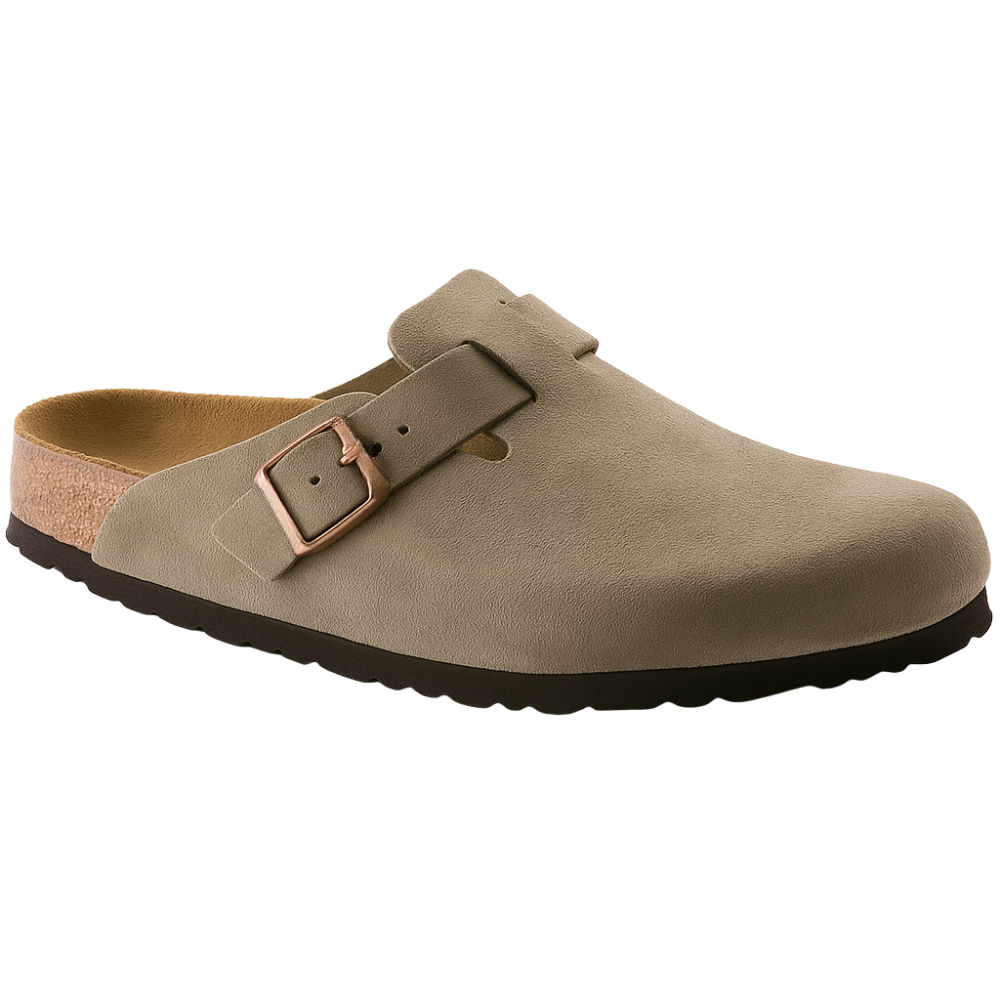
For example, the current Suede Clogs With Cushioned Cork Footbed listing describes a suede upper, a cork-latex footbed with a foam layer and an EVA outsole. These are the components stated in that listing, not an independent laboratory assessment of the shoe.
Compare the whole construction, not a shared word
The EVA Sandals With Two Adjustable Straps listing describes a molded EVA construction. That is different from a clog whose EVA reference applies to the outsole beneath other components.
| Listing | What the material description applies to | What not to assume |
|---|---|---|
| Suede Clogs With Cushioned Cork Footbed | Suede upper, cork-latex and foam footbed construction, EVA outsole | The suede upper or footbed is made of EVA |
| EVA Sandals With Two Adjustable Straps | The listing describes molded EVA construction | Every other sandal with an EVA outsole has the same construction |
This comparison explains the wording. It does not rank comfort, durability, traction or environmental impact. Those conclusions cannot be established merely by finding the same material name in two descriptions.
Keep care instructions component-specific
A cleaning method appropriate for one product may not suit another with a different upper or footbed. Do not use the molded sandal's care guidance on the suede clog simply because both listings mention EVA.
Find the instructions for the exact item and follow them. If a cleaner is intended for a particular material, that does not automatically make it appropriate for every finish, adhesive or other part of a mixed-material shoe.
Avoid soaking, machine washing, applying heat or using a treatment unless the product instructions allow it. The material breakdown helps explain why one universal shoe-cleaning rule can be misleading; it does not replace the maker's care directions.
Separate material information from performance claims
Material names tell you something about construction, but not everything about the finished product. They do not by themselves establish slip resistance, drying time, medical support or suitability for a particular workplace.
Likewise, an EVA outsole does not make a shoe with a different upper universally waterproof. Evaluate any whole-shoe claim separately and do not extend it beyond the actual product and conditions described.
Use a three-part reading habit
Before comparing shoes, identify the upper, footbed and outsole in each listing. Keep unknown components unknown rather than borrowing details from a similar-looking product.
Then assess fit and intended use separately. The Adjustable EVA Sandals, Slides and Clogs Fit Guide covers a different question: how the selected footwear fits you. Construction labels and fit information work together, but neither can substitute for the other.