
Choose lace-free sneakers when you want to remove the tying step, while keeping fit and ease of entry as separate checks. Without laces, you also lose the familiar adjustment you make by loosening or tightening a lace-up shoe.
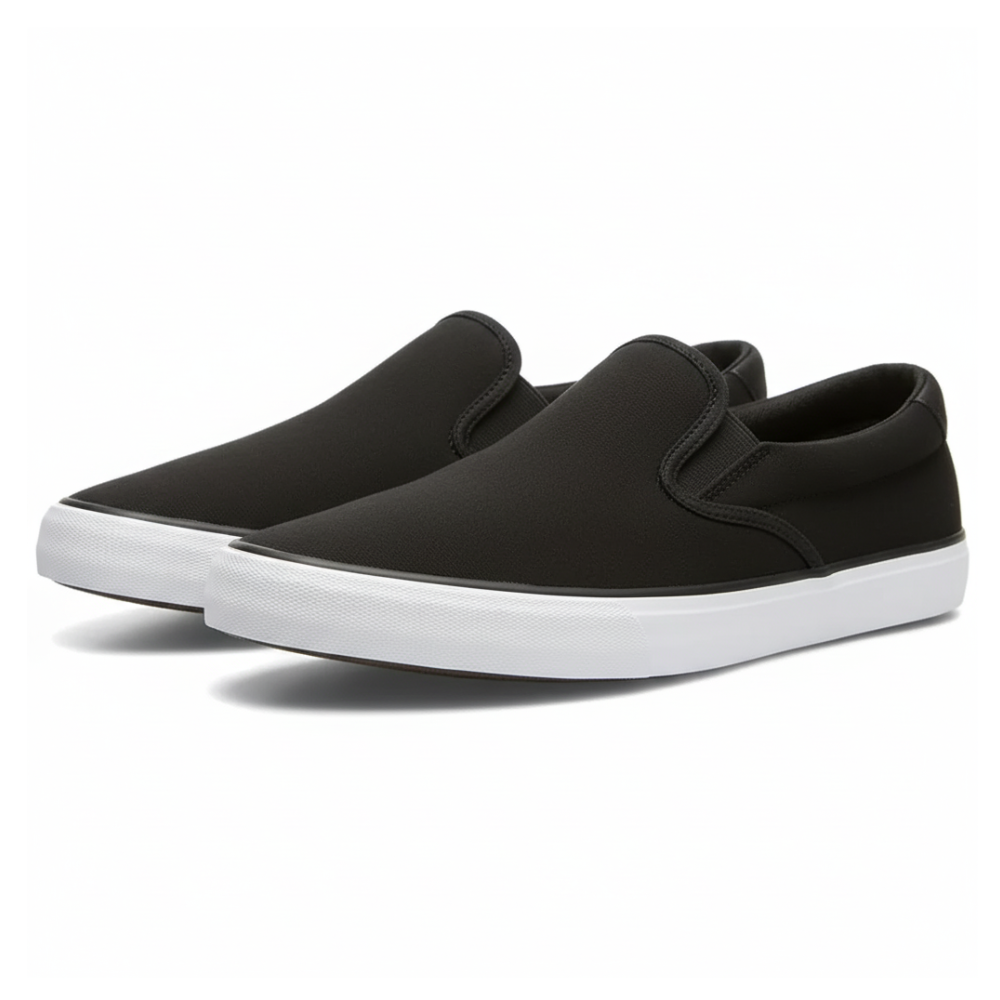
Shop Shoe Deals' Slip On Canvas Sneakers With Contrast Sole For Modern Appeal is described as a slip-on design without laces or fasteners. The featured photograph shows a black pair with white soles and no visible lacing system.
Which part of the routine do you want to change?
Before Black Friday and Cyber Monday shopping, notice what you actually do with your current sneakers. Do you retie them every time, leave them tied and loosen them, or change the tension during the day?
If tying is the step you want to remove, a slip-on format answers that preference. It does not by itself establish that the opening will accept your foot easily or that the shoe can be put on without using your hands.
A sock-change example
Suppose you wear a thinner sock on one day and a thicker sock on another. With your current lace-up pair, you may change the lacing tension. A slip-on does not offer that same lace adjustment.
For the new pair, assess the actual combination with the socks you intend to use, within the seller's try-on conditions. Do not plan to stretch an uncomfortable shoe into suitability or assume a larger label will solve every fit issue.
Keep convenience and security distinct
A shoe being quick to remove is not proof that it will stay in the position you prefer while walking. The format tells you how it closes; your own fit check answers how the actual selected pair behaves on your foot.
Review the current size guidance for this listing rather than transferring a number from a different sneaker. If adjustability is an essential requirement, make that part of your question before ordering.
Make a simple preference decision
Write either “I want no tying step” or “I need lace adjustment.” If the first statement fits, consider this slip-on on its own fit and design details. If the second is essential, keep that requirement visible instead of letting a clean product photograph decide for you.